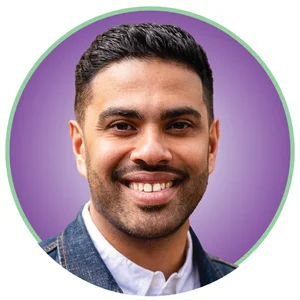
After more than 20 years of treating children with obesity, I've learned that one of the biggest challenges isn't just treating the disease, it's helping people understand what obesity actually is.
In this episode of Conversations With Sekani, I share some of the experiences that shaped my path into medicine, from growing up and discovering an interest in medicine to the intense years of medical school and surgical training. I also talk about what I would tell my younger self—and why staying open to unexpected opportunities can make all the difference.
We then get into the science of obesity and why the traditional idea of simply "eating less and moving more" doesn't tell the whole story. Obesity is influenced by genetics, epigenetics, environment, and the body's own biology, and those factors can affect people very differently.
We talk about:
My childhood and what first sparked my interest in medicine
What my 20s were like during medical school and surgical training
Why I encourage young people not to rush their path
How I came to understand obesity as a complex disease
The roles of genetics, epigenetics, and environment
Why individual patients can have very different outcomes
Why "eat less, move more" is an oversimplification
Where I believe obesity treatment is headed in the future
My goal is to make the science easier to understand and to challenge some of the assumptions we've carried about obesity for years. The more we understand how weight is regulated, the better we can support people living with obesity and move toward treatments that actually reflect the biology of the disease.
I hope this conversation gives you a clearer perspective on obesity, medicine, and the journey that led me to this work.